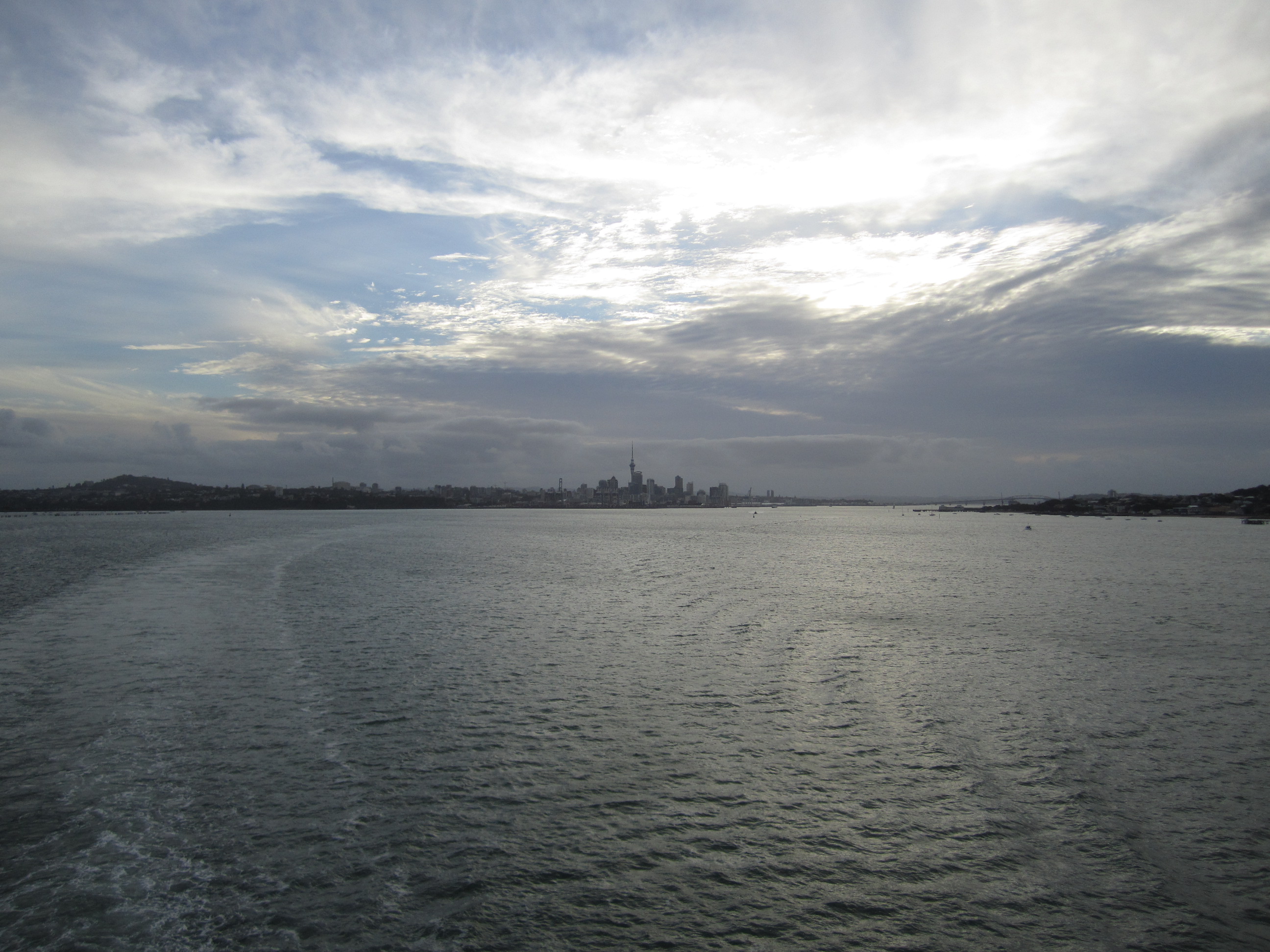
Having left New York nearly two weeks ago, it was incredibly nice to wake up with our ship just a stone’s throw from downtown Auckland. Tall buildings again! The cruise terminal is part of the downtown harbor, so there is no need to tender or take a vehicle to access the heart of Auckland. On TripAdvisor, I had found a highly regarded day tour that explored much of the center of the North Island, from Auckland to the west coast. We had another earlier start – for being on vacation, anyway – and, after a quick breakfast at the buffet, made our way off the ship to meet our tour guide, Stu. At both of the New Zealand ports, the authorities have been very clear that consumable food items must remain on the ship, and security was noticeably more present than in the Polynesian Islands. Nonetheless, we did not have any issues, and there was enough food on the tour that anything that we brought with us would likely have gone uneaten anyway.
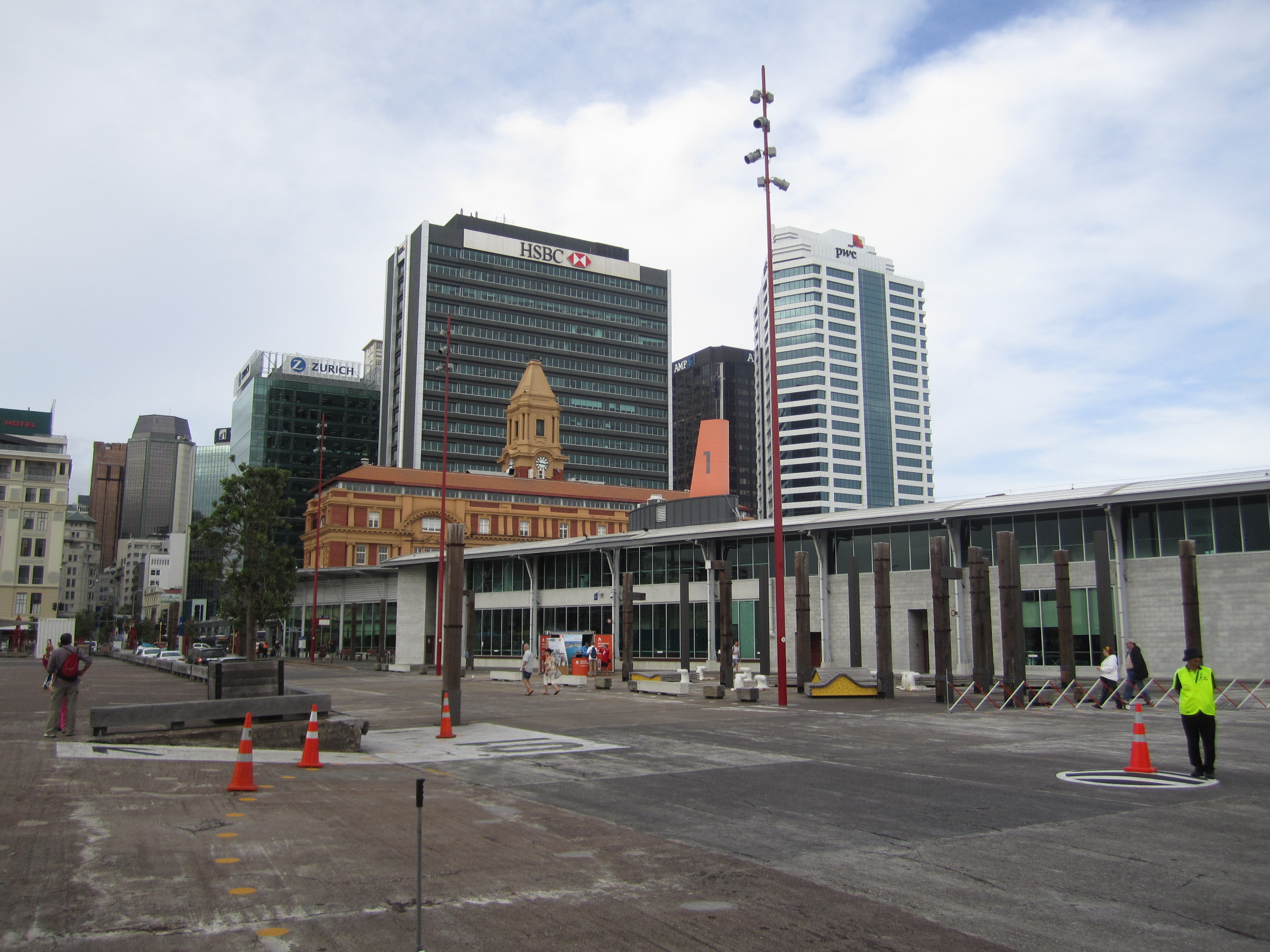
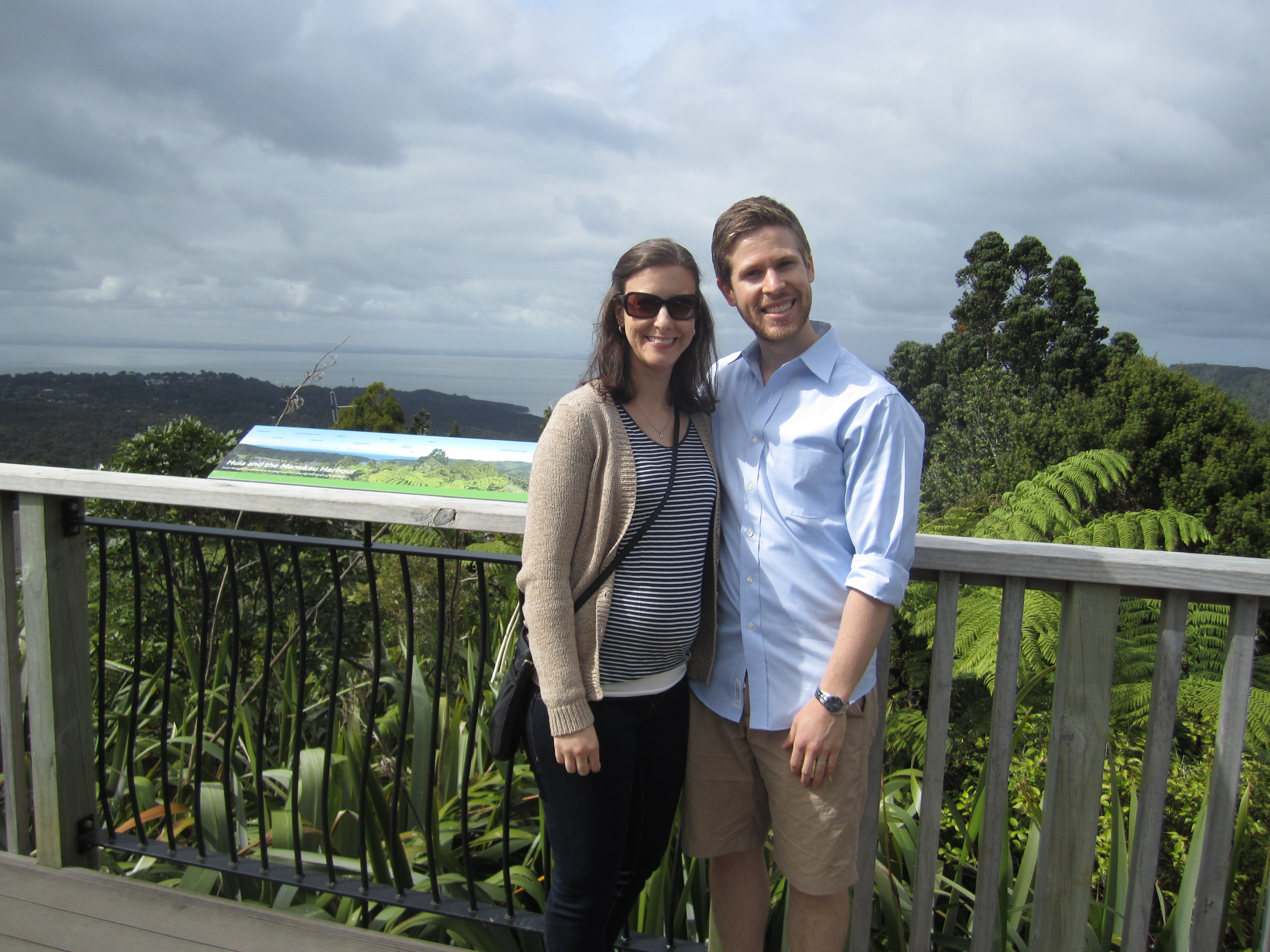
Off the ship, we met Stu and another couple from British Columbia, who had also signed up for the tour. After a half-hour drive, during which Stu provided background on Auckland and New Zealand, we arrived at the Arataki Visitor Center, overlooking at Waitakere Ranges Regional Park. As a sub-tropical rain forest, the park offered a blend of warm- and cold-weather sights, smells, and sounds. We learned more about the possum pest problem in New Zealand, and Stu was kind enough to show a taxidermied version to accompany his explanation. It must have been our minds playing tricks, but we were all sure that the bag was moving before the stuffed creature was unveiled. Stu also explained that many Eastern Europeans had moved to the area to harvest gum from the Kauri trees that we had also seen in Puketi Forest. When the market for Kauri gum dried up, the harvesters stayed in New Zealand and started growing grapes; thus, the New Zealand wine industry was born.
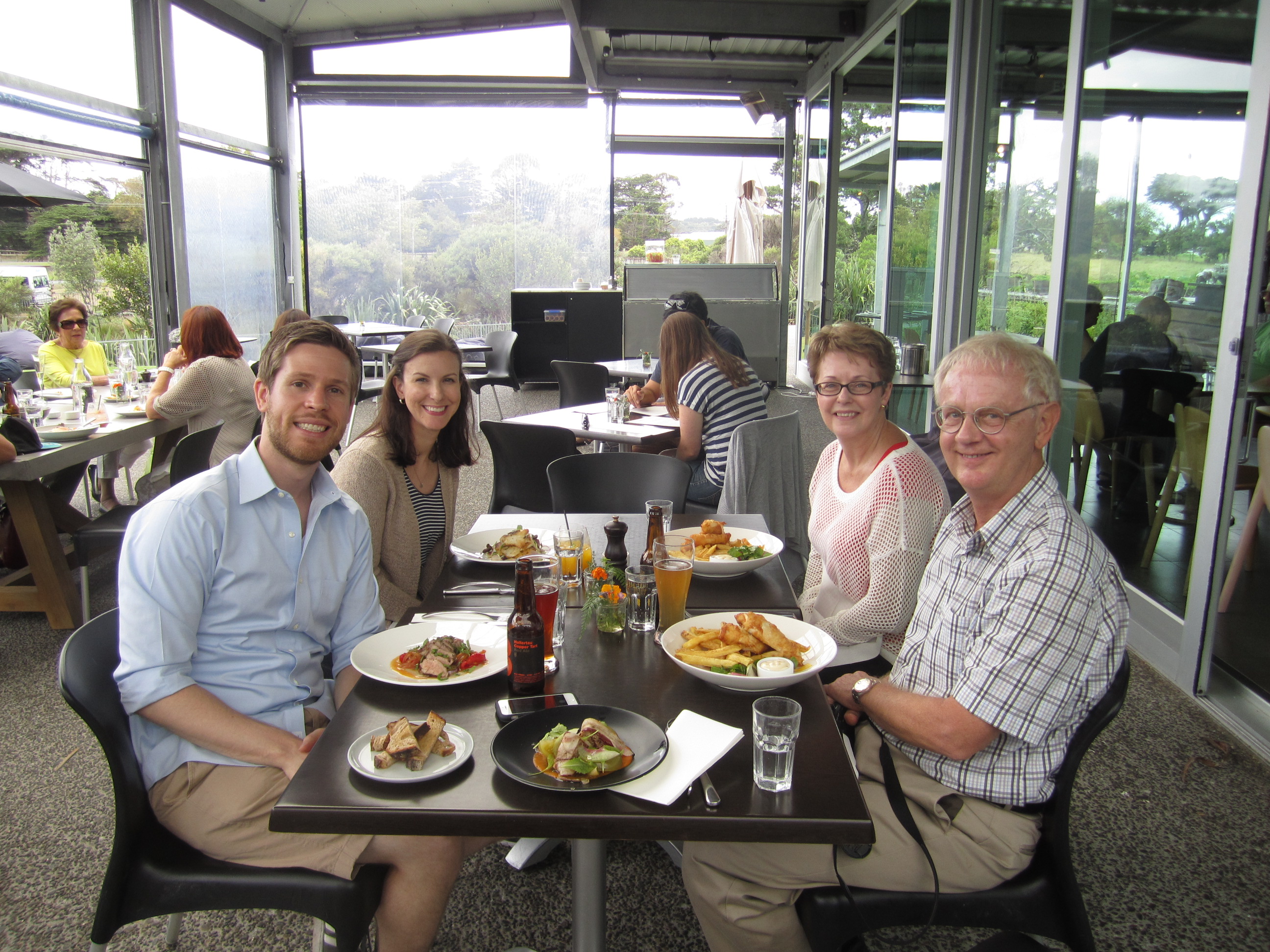
After that explanation, our next stop was, naturally, a wine tasting, although Ann Taylor could only listen to the descriptions of each of the nine varieties that we tasted. There are limits to the amount of wine or champagne that one can bring back onto the ship, and it can also be a pain to carry bottles of wine through airport security, but we took a business card and a picture of the nine bottles so that we could find them again in Brooklyn. Approaching mid-day, our next stop was for lunch, at a local spot that also farms bees for honey used in their dishes and sold in their small shop. I enjoyed the lamb and a local red ale, while Ann Taylor tried the market fish (unfortunately, I do not remember the specific type) and a glass of very fresh orange juice. We also learned that Stu had inherited his sheep farm – an afternoon stop – from his father, who was given the land in recognition of his service during the first World War (Stu was a late child). I found that the local stories were even more interesting than the history of New Zealand, and Stu had plenty of tales to tell.

We reached the west coast and Muriwai Beach in the early afternoon. The beach is home to a colony of Gannet birds, which nest locally until their young are old enough to fly to Australia. The Tasmanian Sea was much rougher than the Pacific Ocean, and I am hopeful that we do not experience similar waves on our three day voyage from New Zealand to Australia later this week. We spent a bit of time walking along the black sand beach, then we piled back into the van for the short drive to Stu’s working sheep farm and homestead. At the farm, we met Stu’s wife, Donna, who took the lead on our afternoon tour. She shared pictures that showed how their house and farm had grown over the past century, and showed artifacts that had been discovered from an early 20th century logging settlement.

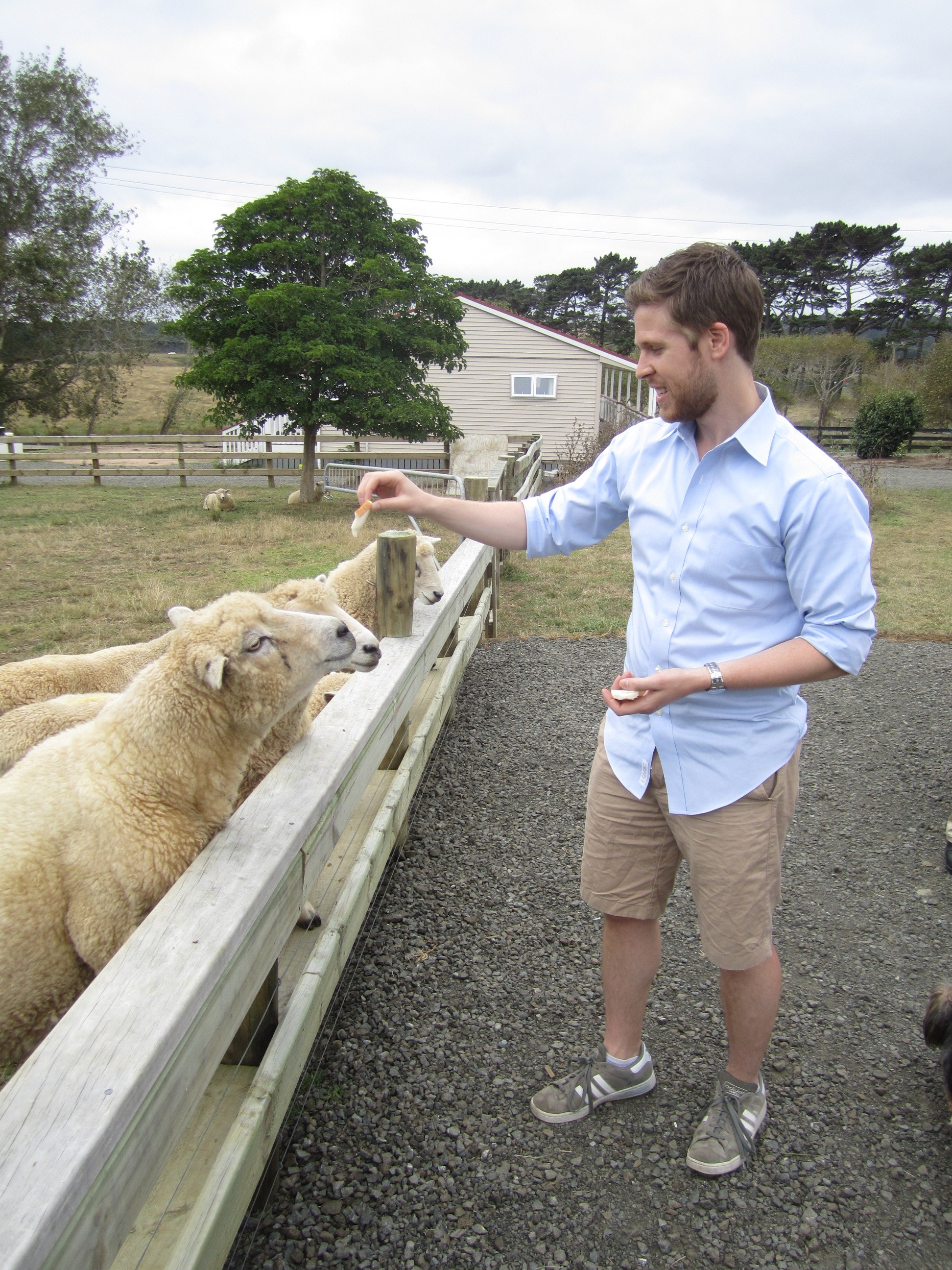
Returning outside, we made our way to a sheep pen in their front yard, where we were given bread to feed the sheep. Donna said that the sheep treat the bread like we treat chocolate, and the sheep were quite excited for the treat. I think that Ann Taylor did a much better job of feeding the sheep, as I had trouble getting past one particularly aggressive critter. After the sheep were hopped up on white bread, Stu introduced their sheep dog, Roy Roy, who demonstrated his herding prowess by collecting the sheep into a corner of the pen. It was really quite impressive! Donna then showed us around the rest of their yard, with various domestic and imported fruit trees, including a Kiwi fruit plant. Stu and Donna take pride in offering carbon-neutral tours, and they plant a tree in honor of each group. We selected a number to tag our tree, and they will be sharing the GPS coordinates after it is planted so that we can find it again using Google Maps.

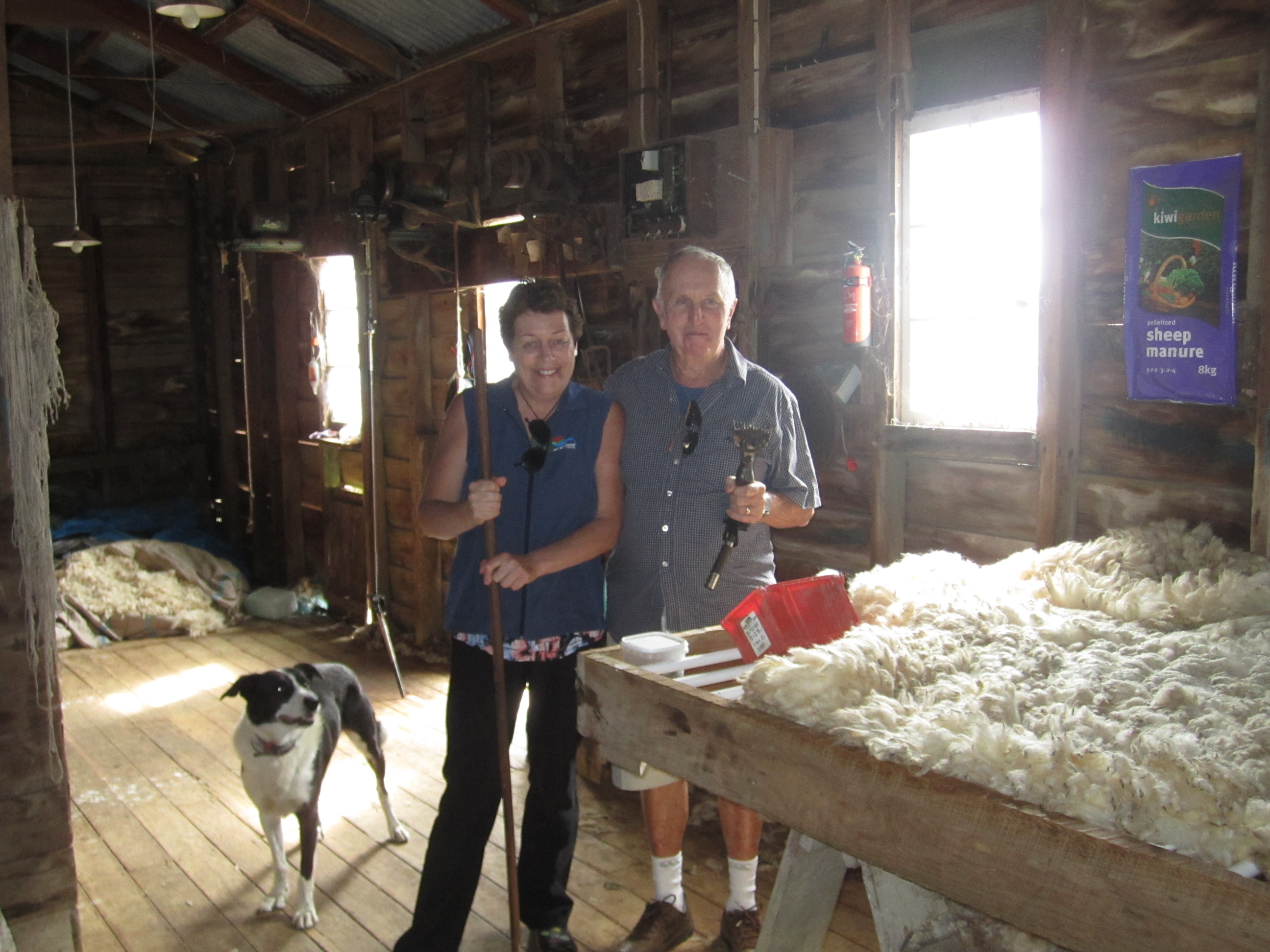
A short walk led us to a separate pen, where Donna keeps their blind sheep, Pepe, who acted more like a dog than a sheep. Inside the sheep shack, we learned how Stu and his team sheer their sheep, which happens once each year. Selling the wool barely covers the cost of the sheep shearer, but they need to sheer the sheep so that the wool does not become overgrown and matted, which would depress the sheep and cause their wool to fall out in uneven clumps. The picture was not pretty. We met a couple of Australian parrots in another area of the farm, and a blind magpie that Donna has raised for the past twenty years. The bird cannot feed itself, so Donna needs to provide it a mix of turkey, vitamins, and feathers (!) four times a day, from sunrise to sunset, to simulate the food that it would catch in the wild. I thought that was an incredible commitment to sign up for, but then realized that we will become parents later this year, and that babies eat even more often than that. At least we will not need to feed our child bird feathers.

Back inside, we enjoyed an afternoon snack of cheese, homemade preserves, lamb meatballs – not from their farm – and sweet potato. It was all very tasty, but the highlight was the Pavlova dessert, adorned with a small New Zealand flag. It was a light meringue with cream and Kiwi fruit, and definitely a recipe that I will be adding to our Summer collection. Having experienced a wonderful visit to the farm and homestead, we bid farewell to Donna and hopped back into the van for the ride back to the ship. Upon our return to Auckland, we split from Stu and the Canadian couple and walked around downtown for a little while. It was surprisingly nice to see crosswalks and coffee shops! We found a nice view of the Auckland Sky Tower, but, unfortunately, did not see anyone bungee jumping from the top. By this time, we needed to make our way back to the ship to ensure that we were not left behind. As it were, we were too late for our dinner seating, so we enjoyed dinner from the Panoramic Buffet, which offered amazing views as we pulled away from Auckland.


After dinner, the evening performance was a comedic mind-reader in the Cabaret Lounge. While his mind-reading was decent, he was definitely the funniest comic that we have seen on the cruise. It is also possible that our expectations for cruise line entertainment are too high, with the bar set by previous Disney cruises. The bigger highlight of the night was the extended evening karaoke. After our first karaoke experience, many of the other guests have come up to us and introduced themselves around the ship. Apparently I had made an impression, as one woman remarked that my performance had made her husband comfortable enough to submit his own song later that night. So glad that I could lower the bar for everyone. Nevertheless, we have made a lot of friends on the ship, and it was a lot of fun to sing Springsteen’s “Glory Days” to the crowd. Later, Ann Taylor also braved the stage and sang “The Devil Went Down to Georgia” to a very impressed audience! It was very different than renting a small karaoke room with our friends in Manhattan, but still quite fun. With a long day behind us, we are retiring shortly so that we have plenty of energy for the excursion that I am most excited for: a trip to the Hobbiton movie set!